By Richard Sison | 2013Shema Yisrael or simply called Shema (Hebrew: שמע ישראל; "Hear, [O] Israel") are the first two words of a section of the Torah (First 5 books of the Bible) that is considered as a centerpiece of the morning and evening prayers among Jewish people. The first verse encapsulates the monotheistic essence of Judaism. Shema runs like this:
Shema Yisrael Adonai Eloheynu Adonai Echad. Baruch shem kevod malchuto L'olam va'ed Hear O Israel, the Lord is our God the Lord is one. Blessed is the name of his glorious kingdom for all eternity. Shema is considered as the most important prayer among the Jews and one of the oldest liturgies (over 3,000 years old) in Judaism. They would recite it twice a day, one in the morning and one before sleeping in obedience to Deut 6:7. The term "Shema" is used by extension to refer to the whole part of the daily prayers that commences with Shema Yisrael and comprises Deut 6:4–9, 11:13-21, Num 15:37–41 and Lev 19:18. As for the messianic believers Jewish people who acknowledges Yeshua (Jesus) as Lord and Messiah), they would recite the Shema and V'ahavta(meaning "And you shall love...") as stated in Deut 6:4–9 and Lev 19:18. The way it is being recited by the Jewish people is thru their traditional song from way back, thousands of years ago. The commandment to recite the Shema twice daily is ascribed by Josephus to Moses ("Antiquities" 6:8), and it has always been regarded as a divine commandment (Sifre, Deut. 31.)
1 Comment
By Richard Sison | 2013Passover is probably the best known of the Jewish holidays simply because it ties with our Lord`s Last Supper, which was a Passover Seder. We believe without a doubt that what Jesus (Yeshua) did on that night was very messianic in nature and a lot of its observances and practices are types and shadows pointing to Jesus.
Passover begins on the twilight of the 14th day of the Jewish month of Nisan. It is the first of the three major festivals with both historical and agricultural significance (the other two are Shavu’ot and Sukkot). Agriculturally, it represents the beginning of the harvest season in Israel, but little attention is paid to this aspect of the holy day. The primary observances of Passover are related to the Exodus from Egypt after 400 years of slavery. This story is told in Exodus 1-15. Many of the Passover observances are instituted in Exodus 12-15. The name “Passover” refers to the fact that the angel of death “passed over” the houses of the Jews and God fearers, those who placed blood in the door post, when he was slaying the firstborn of Egypt. In Hebrew, it is known as Pesach, which is based on the Hebrew root meaning “pass over”. The holiday is also referred to as Chag he-Aviv (the Spring Festival), Chag ha-Matzoth (the Festival of Matzahs), and Zeman Herutenu (the Time of Our Freedom). By Richard Sison | 2013It is sad that some people have NOT completely researched the whole messianic movement and after meeting some, have concluded that all of us are the same. I would certainly love to present to you some groups that DO NOT fall into the category of some questionable theologies. When people started to call messianic groups as "Cults", they already painted black many legitimate messianic groups. Obviously, they seem to have encountered those with bad theologies but what about others who dont fall into that category? There are many messianic groups in Israel and North America that adhere to the Jewish customs and Biblical practices at the same time and yet have the right theologies and same beliefs with mainstream evangelicals but they dont call themselves "christians". There are also a lot of so-called evangelicals who do not adhere to the Biblical theologies and what do you call them?
If you further examine the early believers especially those in Judea and Asia Minor during the 1st and 2nd centuries, you will find them very different from those christians in Rome, Alexandria and other places. No wonder pope or bishop Victor of Rome towards the end of 2nd century called them heretics and yet if you examine deeper, they actually adhere to the teachings and practices of apostles John, Phillip and other heavy weights of the early faith. By Richard Sison | 2010Feast of Sukkot >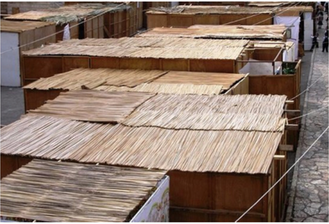 This Feast is also known as the Feast of Booth (Hebrew for Sukkah) or Feast of Tabernacle or Feast of Ingathering and is the last Biblical feast for the year. This Feast was described in Lev 23:39-42 “Also in the fifteenth day of the seventh month, when ye have gathered in the fruit of the land, ye shall keep a feast unto the LORD seven days: on the first day shall be a Sabbath, and on the eighth day shall be a Sabbath. And ye shall take you on the first day the boughs of goodly trees, branches of palm trees, and the boughs of thick trees, and willows of the brook; and ye shall rejoice before the LORD your God seven days. And ye shall keep it a feast unto the LORD seven days in the year. It shall be a statute forever in your generations: ye shall celebrate it in the seventh month. Ye shall dwell in booths seven days; all that are Israelites born shall dwell in booths“.
The Jewish people including the Messianic believers started to celebrate this feast on the sunset of Monday, October 13 and ended on the sunset of October 22, 2008. We were invited by a Jewish believer to join them in their celebration at their home. He built a booth or a Sukkah at his backyard. The booth has a cloth covering on the three sides and open on the front. The roof was made of leaves and branches that cover most of the sunlight in the daytime but enough to see the stars at night. He decorated it with fruits and vegetables all around it as God commanded the children of Israel. There at the booth, we prayed and thank God for all His blessings and we joyfully shared the meal and the word of God. It was a joyous occasion and I am looking forward to celebrate it once again. The next day, we attended the Sukkot service at the Shul (literally means place of learning or also known as synagogue) and worship the Lord together. The Messianic Rabbi explained the significance of Sukkot especially for the believers of Messiah Yeshua (Jesus Christ). By Richard Sison | 2010Last September issue, I shared with you the wonderful things I learned when I attended celebration one of the Biblical feasts, which is Rosh Hashanah. It is part of the three High Holy Days being observed by the Jewish community during this time of year. The other holy days are Yom Kippur (Day of Atonement) and Sukkot (Feast of Tabernacle). Yom Kippur is observed every 10th day of the seventh month (Tishrei) of the Jewish calendar. It is a one-day event and is normally observed in a most solemn way and usually with fasting and praying. Yom Kippur fell between 8th and 9th of October this year. Sukkot on the other hand is observed five days after Yom Kippur, that is every 15th day of the seventh month. This feast is celebrated for eight days with the first and the last day being the most holy days. Sukkot is also known as Feast of Ingathering and is being observed with joyous celebration. Sukkot is also known as Feast of Booths as the Jewish people observing it make temporary shelter or booths made of branches or poles as pillars and leaves as roof. They would decorate it with fruits and vegetables hanging around it. As a believer in the Lord, I was both joyful and sad when I celebrated the high holy days. I had so much joy because I am beginning to understand the Jewish roots of our faith and how rich the eschatological truths about these God’s appointed times. However, I also felt sad because as a Christian believer, we were never taught about these things and we missed out a lot of blessings and joy of knowing God’s perfect plan through His appointed feasts. As Christians, we celebrated holidays and festivities of the world, which are mere traditions of men and we even tried to Christianize these holidays or put a Christian flavour to worldly (most of them are pagan) holidays to somehow make it Biblically compliant. However, no matter how we Christianize these worldly holidays and feasts, they will never be God’s appointed times. It is my prayer that you will share the joy that I have as I relay to you the experience I had in celebrating God’s appointed times.
1. All the Scripture is inspired by G-D (2 Tim 3:16)
2. The Word of the L-RD does not change (Isa 40:8; Luke 21:33) 3. The L-RD does not change (Mal 3:6; Núm 23:19; Heb 13:8) 4. The Scripture cannot contradict or replace itself 5. The Scripture does not contain errors 6. Scripture interprets Scripture 7. The Bible is the sole authority of the Truth Objectives >1. To keep and guard the Sabbath and the Seven Appointed Feasts as commanded in the Torah and to practice Biblical traditions. 2. To observe and obey all the commandments of the L-RD as stipulated in the Torah, repeated in the Tanakh and adhered in the Brit Chadasha. 3. To help the poor, the needy and sick especially those in the Body of Messiah through prayers, financial and moral support. 4. To support and help Israel and the Jewish people in every way we can. 5. To provide good teaching materials to help other believers grow in faith and knowledge of the L-RD. 6. To conduct outreach programs, preach the Gospel and to help others who are in need locally and internationally. 7. To unite with other Messianic congregations of the same beliefs and practices and establish relationship with the rest of the Body of Believers. 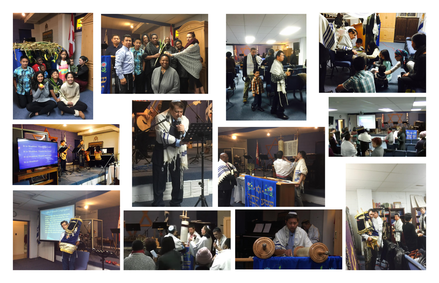 Goals >1. To bring glory, honour and praises and to serve the One True G-D Almighty and to His Son, Yeshua HaMashiach (Jesus Christ), the Anointed One.
2. To diligently search out and implement the Hebraic and Jewish Roots of our faith. 3. To understand and carry out the true Biblical Teachings, as stipulated in the Torah, affirmed in the Tanakh and explained in the Brit Chadasha 4. To restore and adopt the Teachings and Practices of Yeshua, which were practiced and implemented by the 12 apostles and their followers in the first century. 5. To practice and propagate through good example the commandments of the L-RD to other people. 6. To preach the Gospel of salvation to all people. 7. To establish more Messianic congregations in Toronto and other parts of the world as the L-RD enables us. We are a group of Messianic believers who adhere to both the older and newer covenants. We believe that Yeshua (Jesus) is the Messiah and that He existed in the form of God (Phil 2:6), being the Word of God from the beginning, was with God from eternity past and all things came to being through Him (John 1:1-3). We believe that He is the image of the invisible God and by Him all things were created in the heavens and on earth and He is before all things and in Him all things hold together (Col. 1:15-17). We believe that Yeshua stepped out of eternity and became man in human flesh and dwelt among His people (John 1:14). We believe that He was born of a virgin (Luke 1:26-35) in the line of king David, his servant (Matt 1:1-16; Luke 3:23-38). We believed that Yeshua kept the Law (Torah) and all God’s commandments and He is the embodiment of the whole Torah, the Living Word of God. We believe that He came not to destroy the Law but to fulfill (Matt 5:17-19). We believe that He is the promised Messiah, the Saviour of the world. We believe that He is the only way to the Father (John 14:6) and that salvation can only be attained through Him by faith alone (Eph 2:8-9) as there is no other name under heaven that we can be save except through Him (Acts 3:12). In Him was life and the life was the light of men (John 1:4). We believe that Yeshua suffered and died in the cross for our sins (Matt 27:27-50) and He was buried (Matt 27:57-66) and was raised into life on the third day according the Scriptures (Matt 28:1-20; 1 Cor 15:1-4) and was seen by the apostles and over 500 witnesses (1 Cor 15:5-8). We believe that He ascended to Heaven after resurrection in the presence of many witnesses (Acts 1:9-10) and seated with the Father in glory (Acts 7:56; Heb 1:13) and that He will come back again in the same way He ascended to Heaven (Acts 1:11) at the time that only the Father knows (Acts 1:7) but when He comes back, He will judge the living and the dead (Matt 24:29-31; 25:31-46). We believe that Yeshua sent the Ruach Hakodesh (Holy Spirit) the Helper, the Councilor, from the Father (John 16:5-15; Acts 2:1-12). We believe that the Ruach Hakodesh is our seal and was given as a pledge of our inheritance and redemption (Eph 1:13-14) and that He (the Holy Spirit) will teach us all things and bring into remembrance all that Yeshua said (John 14:26). We believe that all Scriptures (the Bible) is inspired by God and profitable for teaching, for reproof, for correction, for training in righteousness that the man of God may be adequate, equipped for every good work (2 Tim 3:16-17; Rom 15:4). We believe that the word of God does not change and Torah (Law) was not done away with (Matt 5:17-19; Luke 16:17) and that we are to keep His commandments (1 John 2:3-7). We believe that there is only one Lawgiver and Judge, the One who is able to save and destroy (James 4:12; Acts 7:28; Mal 3:1) and we believe that Yeshua is the giver of the 10 commandments and the whole Torah to Moses. We believe that Yeshua is the same yesterday, today and forever (Heb 13:8; Rev 22:13). We believe that the believers should keep the commandments of God and hold to the testimony of Yeshua (Rev 12:17; 14:12) and if we truly love Yeshua (Jesus), we should keep His commandments (John 14:15; 15:10). We believe in the two greatest commandments that is to love our Lord God with all our heart, soul, mind and strength and to love our neighbors as ourselves. These two commandments summarized who whole Law. We believe that we cannot be saved by good works but rather we were saved to do good works (Eph 2:10) and that we have to work our salvation with fear and trembling (Phil 2:12). We believe that believers can still sin and can be forgiven when we confess our sins, He is faithful and just to forgive us from our sins (1 John 1:9). We believe that salvation is permanent to those who are really saved (John 10:27-30; 1 John 5:13). We believe in the Great Commission and evangelism and the Gospel of truth has to be propagated to all people (Matt 28:18-20). We believe that the Jewish people are the chosen people and that salvation will come to them in God’s time (Rom 11:25-29; Zech 13:8-9). We believe in the seven years tribulation as mentioned in Matthew 24 and the book of Revelation. We believe in the snatching away of believers (Matt 24: 40-41; 1 Cor 15:51-53; 1 Thes 4:16-17) and we also believe in the resurrection of the believers being the first resurrection (Rev 20:4-6). We believe that Yeshua will reign as King in the Millennial Kingdom (Rev 20:4; Ezek 40-48). We believe that angels are ministering spirits sent to render service for those who will inherit salvation (Heb 1:14). We believe that satan is the enemy of God and the devil is a roaring lion and is ready to steal, kill and destroy (1 Peter 5:8; John 10:10). We believe that Sabbath is the day of worship, as it has been established from the beginning (Gen 2:3). Yeshua and His disiciples practiced them as mentioned in the 4 Gospels. Proper observance of Sabbath will be reinstituted in the Millennial kingdom (Ezek 40-48) and will be observed in the new heavens and new earth (Isa 66:22-23). We believe and adhere to the Appointed Times of God as stipulated in Leviticus 23 and keep the food commandments as identified in Leviticus 11. We, however, do not judge our fellow believers with regards to food or drink or Feasts, New Moon or Sabbath day for these are shadows of what is to come for the body of Christ (Col 2:16-17). We believe that these practices are not salvation issues and should not hinder the fellowship between brethren. We believe that love is supreme above all these things and we ought to love our neighbor fulfilling the royal law of Christ (James 2:8). We believe in the universal body of Messiah, among the brethren and we recognize that each believers and group of believers perform specific and unique tasks in building the kingdom of God. We encourage you to join us in the discussion and we will answer your questions in the best we can in accordance to the word of God.  |
AuthorElders and Deacons of Light of Messiah Ministries Canada ArchivesCategories |
 RSS Feed
